Nintex vs Process Street for Document Automation
Your team needs to pick between Nintex and Process Street for document automation, and the split comes down to whether you value native policy control or separate workflow tools. Many platforms force you to stitch compliance checks onto basic document flows, leaving gaps in audit records and policy enforcement. Process Street bundles both in one platform.
By the end you will see direct feature mappings for compliance and policy control, workflow automation with AI, and security settings. You will also compare pricing models and receive a clear recommendation for each tool based on your exact use case.
Quick Verdict: Nintex vs Process Street for Document Automation
Process Street provides audit-ready document automation with SOC 2 Type II certification and three pricing tiers, while Nintex offers broader BPM capabilities across on-premise and cloud deployments. The core differences center on Process Street's focused approach versus Nintex's established enterprise presence.
Organizations seeking streamlined document automation often prioritize speed and simplicity. Process Street delivers these benefits through its focused approach to checklist automation and approval workflows. The platform maintains compliance through multiple certifications including ISO 27001 and HIPAA options.
Process Street's Startup plan includes a 5,000 Data Set records limit. Nintex pricing is not specified here. The service supports 3,000+ companies and 1m+ users who rely on its audit trail capabilities for regulatory requirements.
Teams report significant efficiency gains when switching to Process Street's template library and form builder features. The 5 minutes average response time combined with 98% customer rating indicates strong support for document automation needs. Data never gets used to train AI models, addressing privacy concerns common in enterprise environments.
At a glance: how Process Street compares to Nintex, Process Street for Document Automation on the features that matter most.
| Feature | Process Street | Nintex | Process Street for Document Automation |
|---|---|---|---|
| Document Automation | ✓ | ✓ | ✓ |
What Is Process Street?
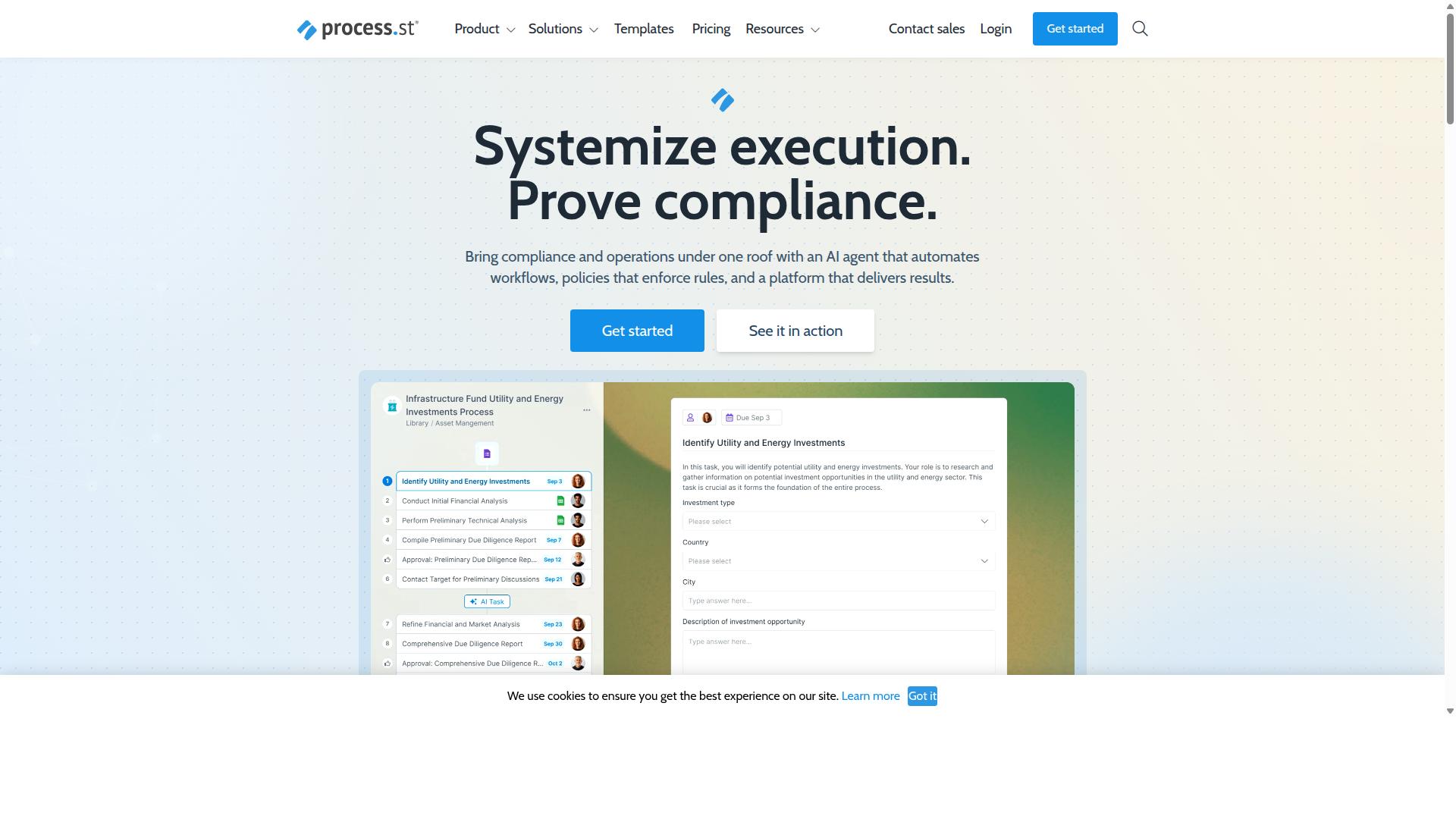
Process Street is a compliance operations platform that automates business processes and enforces policies with audit-ready proof. Organizations across industries use the platform to standardize processes and maintain operational consistency.
The company serves more than 3,000 customers and supports over 1 million users. Three main products make up the offering: Docs for document management and policy control, Ops for workflow automation and process orchestration, and Cora, an AI compliance and risk agent.
These products work together to help teams manage document automation needs alongside broader business process management requirements. Process Street positions itself as a compliance-focused solution rather than a general-purpose automation tool.
What Is Nintex?
Nintex is a business process management platform that provides workflow automation and document generation capabilities across various enterprise environments.
Business process management tools like Nintex help organizations handle complex approval workflows and document processes. The platform supports workflow automation through visual designers that allow users to map out processes without extensive coding knowledge.
Document generation features enable teams to create standardized documents from templates. Users can pull data from connected systems to populate forms and generate consistent outputs for contracts, reports, and other business documents.
The platform offers form builder capabilities that support data collection across different business functions. These forms connect with existing enterprise systems to streamline information flow between departments.
Deployment options include both cloud and on-premise configurations. This flexibility allows organizations to choose deployment models based on their security requirements and existing infrastructure investments.
What Is Process Street for Document Automation?
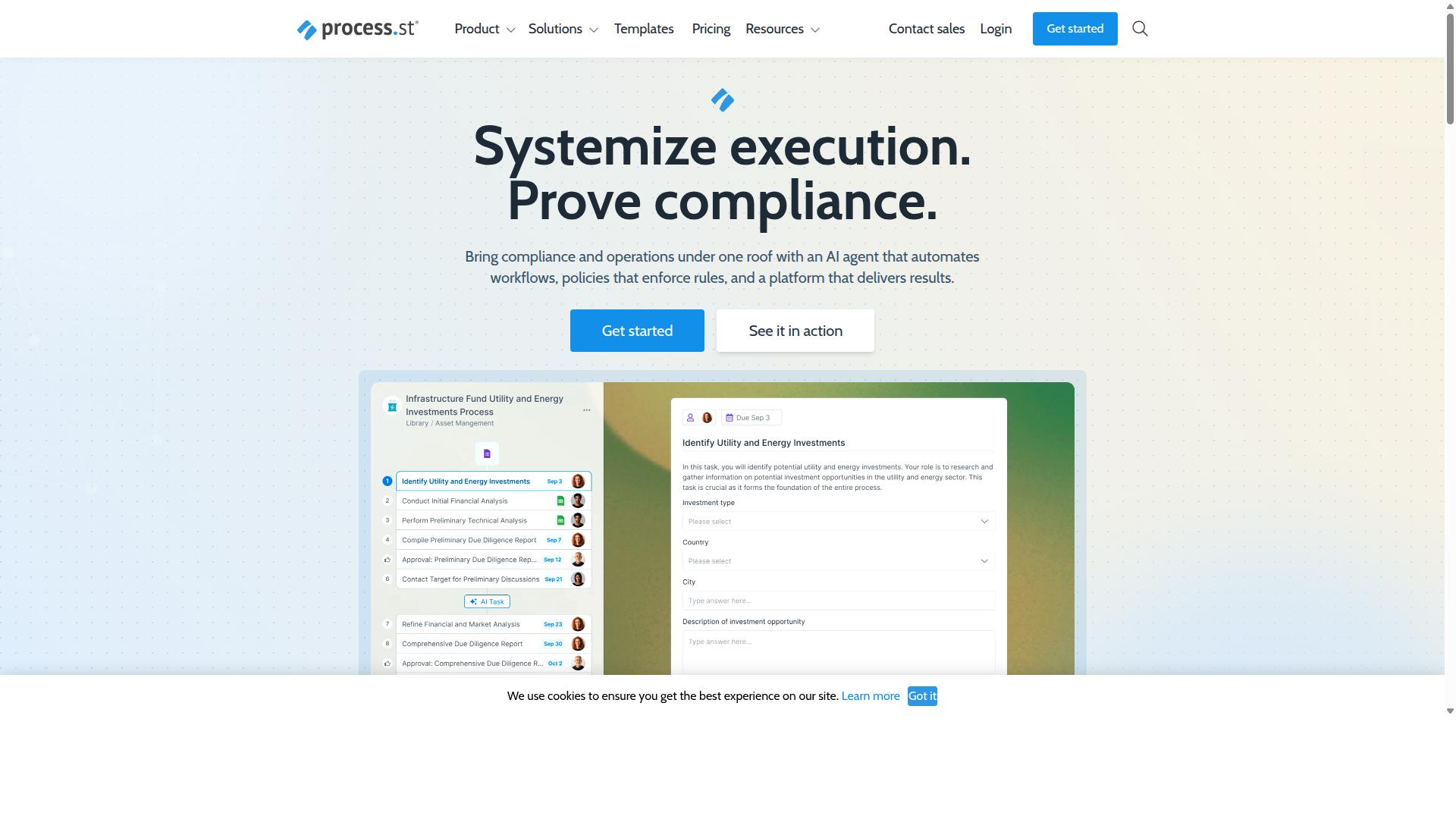
Process Street's document automation focuses on policy control with governance for ISO 9001, SOC 2, SOX, and FDA compliance requirements. The platform centers around Docs, a dedicated product that combines document management with full governance capabilities.
Organizations use Docs to maintain policy documents with version control and approval workflows. This approach ensures every document meets regulatory standards without manual tracking.
Process Street provides compliance support for ISO 9001, SOC 2, SOX, and FDA requirements. These capabilities help teams stay audit-ready through automated policy control features.
The Docs product integrates with the broader Process Street platform. This includes workflow automation tools and AI compliance monitoring through Cora.
Users access Process AI and Analytics features alongside document management. These tools work together to support both document creation and ongoing policy oversight.
Process Street connects with Microsoft Power Automate, Zapier, and Tray.io. The platform also offers Public API access for custom integration needs.
Features Compared
This section breaks down three critical feature areas where Process Street and Nintex differ in their approach to document automation.
Each area shows clear differences in how these platforms handle compliance, automation, and security requirements. The distinctions matter for organizations managing regulated documents and complex approval chains.
Document automation platforms typically differ across governance controls, workflow capabilities, and data handling standards. These three categories reveal the most practical differences between the two solutions.
Compliance & Policy Control
Process Street delivers policy control with ISO 9001, SOC 2, SOX, and FDA governance standards built directly into its document management system.
The platform includes audit-ready proof feature that generates compliance documentation automatically. This capability supports organizations needing continuous evidence of policy adherence across document processes.
Nintex provides general compliance capabilities through its workflow platform. These features typically require additional configuration to match specific regulatory frameworks.
Process Street embeds governance standards within the core document management system. This approach reduces the need for separate compliance tools or manual oversight processes.
Workflow Automation & AI Integration
Process Street's Ops product turns policies into AI-powered workflows that orchestrate tasks across teams and systems.
The platform includes Process AI capabilities that connect policies with automated task execution. Users can access 100 automation actions per month on the Startup plan for basic workflow requirements.
Nintex approaches workflow automation through its established BPM platform with conditional logic and approval routing. The system focuses on traditional workflow design patterns rather than AI-driven orchestration.
Process Street integrates workflow automation directly with policy documentation. This connection allows teams to maintain compliance standards while executing automated document processes across multiple systems.
Security & Data Residency
Process Street offers data residency options across US, UK, Canada, EU, Australia, and UAE regions with SOC 2 Type II certification.
The platform maintains security certifications that align with enterprise requirements for data protection. Organizations can select specific geographic regions to meet local regulatory obligations.
Nintex provides general security measures through its cloud-based workflow platform. The specific geographic deployment options and certification standards vary based on configuration choices.
Process Street's six-region data residency availability supports organizations with international operations. This geographic flexibility combined with SOC 2 Type II certification addresses common enterprise security requirements for document automation.
Pricing Compared
Process Street structures pricing across three tiers with specific user limits and automation allowances, while Nintex uses an enterprise-focused pricing model. Organizations evaluating document automation options need to understand these structural differences to match the right tool to their budget and scale requirements.
The Startup tier offers a simplified entry point for smaller teams. This plan includes unlimited workflows and tasks along with support for 5 users and 10 guests. Teams receive 100 automation actions per month and can access 10 automation apps, making this suitable for basic document automation needs without requiring upfront investment.
The Pro plan expands capabilities for growing organizations. This tier provides up to 10,000 Data Set records and offers custom user and guest allowances. Teams can configure custom automation actions and API call volumes to match their specific workflow automation demands.
Enterprise customers receive the most flexible arrangement with custom Data Set records and unlimited Public API access. This tier includes dedicated Success Manager support, priority assistance, and fully-managed workflows. Additional features encompass bulk document import, process consulting services, and personalized team training for complex BPM implementations.
Nintex pricing operates through enterprise-focused negotiations, which typically means longer sales cycles and less transparent cost structures. Process Street provides clear specifications across all tiers, allowing teams to evaluate document automation costs based on actual usage patterns rather than custom quotes.
Who Should Choose Process Street
Process Street serves teams in Operations, Compliance, Human Resources, Finance, and IT & Security across Financial services, Healthcare, and Manufacturing industries.
Organizations that need documented audit trails for regulatory reviews often turn to Process Street for document automation tasks. The platform provides clear records of every workflow step, which helps teams prepare for external audits without scrambling to reconstruct past actions.
Companies pursuing SOC 2 or ISO certification benefit from built-in compliance features. Process Street supports ISO compliance and quality tracking, allowing teams to maintain consistent procedures while demonstrating control over document handling practices.
Mid-market organizations with 5-100 users find Process Street matches their scale. These companies often need approval workflows that span multiple departments without requiring dedicated IT resources to maintain the system.
Teams handling employee onboarding and client onboarding frequently use Process Street templates to standardize document collection. The template library helps maintain consistency across similar processes while allowing customization for specific requirements.
Document control stands out as another strength for manufacturing and healthcare teams. Process Street enables version control over critical documents, reducing the risk of outdated procedures being followed in regulated environments.
Compared to Nintex, Process Street offers a focused set of workflow automation capabilities without the complexity that often accompanies enterprise BPM platforms. Teams that value straightforward checklist automation over extensive customization options may prefer this approach.
Process Street works well for organizations that want to keep document automation within their existing team structures. The platform supports task assignment and conditional logic while maintaining the audit trail requirements that compliance teams demand.
Who Should Choose Nintex
Nintex appeals to large enterprises requiring on-premise deployment options and extensive BPM capabilities across complex organizational structures. These organizations often operate with legacy systems that demand local infrastructure control. Their processes span multiple departments and regions.
Enterprise teams in heavily regulated industries frequently need strict data residency requirements. They manage approval workflows that touch numerous stakeholders across different time zones. This creates demand for configurable security policies and detailed audit logs.
Organizations with substantial IT resources can invest time in customizing complex process templates. They benefit from extensive integration ecosystems that connect with existing Microsoft 365 environments and SharePoint installations. These connections support broader business process management initiatives.
Global companies with distributed teams often require granular user permissions to manage access across business units. They need version control features that track document changes throughout lengthy approval cycles. This level of control appeals to enterprises managing sensitive information across multiple jurisdictions.
Decision makers who prioritize on-premise solutions typically work within established procurement processes. They favor platforms that offer extensive configuration options for complex document automation scenarios. These organizations usually have dedicated technical teams to handle implementation and ongoing maintenance.
Who Should Choose Process Street for Document Automation
Process Street's document automation serves compliance teams needing policy control with ISO 9001, SOC 2, SOX, and FDA governance standards. Organizations operating under these frameworks often struggle with scattered files and inconsistent approval processes. Document management and policy control features help consolidate policies into governed systems that meet audit requirements.
Teams managing compliance documentation benefit from structured approval workflows that track changes over time. Version control with audit trails supports organizations that must prove document accuracy and update history during inspections. This matters for regulated industries where governance failures carry serious consequences.
Companies requiring faster documentation cycles find value in workflow automation that connects policies to actionable processes. Process orchestration turns static documents into AI-powered workflows that guide teams through required steps. This approach reduces manual handoffs while maintaining compliance integrity.
Organizations that need continuous monitoring choose solutions with built-in risk detection. Cora monitors regulations, automates work, and flags risks without requiring constant human oversight. This capability helps compliance officers stay ahead of regulatory changes across multiple standards.
Process Street also appeals to teams already using Microsoft Power Automate, Zapier, or Tray.io for other business functions. The platform's integrations with these tools allow document processes to connect with existing systems without major infrastructure changes. Public API access supports custom connections when standard connectors do not meet specific needs.
Final Verdict
Process Street delivers measurable efficiency gains backed by SOC 2 Type II certification and 98% customer support rating.
Organizations evaluating document automation platforms should weigh deployment flexibility, integration depth, and support quality when making their decision. Nintex offers established enterprise presence with broad workflow capabilities that suit complex BPM scenarios.
Process Street stands out for teams that prioritize rapid implementation and responsive support. The platform combines checklist automation with document generation features that reduce manual effort across approval workflows.
Teams with 49k+ employees have standardized their onboarding processes using Process Street, demonstrating scalability for growing organizations. This real-world adoption shows strong performance in document automation environments.
Support response time remains a critical factor during implementation and daily operations. Process Street maintains a 5-minute average response time with 98% customer support rating through email and chat channels.
Buyers should schedule demonstrations with both vendors to test specific document automation requirements. Contact sales teams to explore how each platform handles your unique workflows and compliance needs.
Process Street provides SOC 2 Type II certification that meets enterprise security standards for document handling. Organizations requiring audit trails and compliance features can evaluate these capabilities during vendor discussions.
The evaluation process should include testing template library functionality, form builder tools, and integration options with existing systems. Teams can assess which platform better supports their document automation goals through hands-on trials.
Recommended Resources: