Top 3 Alternatives of Scrut Automation for Rapid Setup
Many compliance teams abandon their current automation because setup drags on for weeks and every new workflow still needs IT tickets. The gap between buying a tool and running it without help creates the exact pressure that sends people looking at alternatives.
By the final section you will know which three features actually shorten setup time, how Process Street stacks up against two other options on those features, and a single decision framework to pick the one that matches your timeline and budget.
What to Look For in Automation Tools for Rapid Setup
Rapid-deployment automation tools cut onboarding time and deliver audit-ready evidence within the first week.
Selecting the right compliance automation platform requires focus on four specific features. These elements directly influence how quickly teams can move from purchase to production use.
A guided setup wizard leads new users through each configuration step. This approach eliminates guesswork and reduces the learning curve for new teams.
Pre-built control templates provide ready-made compliance frameworks. Users avoid creating policies from scratch and immediately apply proven structures.
One-click integrations connect with existing cloud services without custom coding. This capability speeds up data flow between systems and prevents setup delays.
Real-time validation confirms each control meets requirements during configuration. Teams receive instant feedback rather than discovering issues during later audits.
Follow this five-step checklist to evaluate any alternative to Scrut Automation.
- Check for setup wizard availability. Estimate 15 minutes for initial account creation.
- Review the template library for your compliance framework. Allow 30 minutes to identify relevant controls.
- Test one-click connections to your cloud environment. Plan 45 minutes for integration verification.
- Run validation checks on three sample controls. Allocate 20 minutes for this testing phase.
- Export evidence reports and confirm formatting. Set aside 10 minutes for final verification.
This evaluation process helps teams compare security platforms and governance tools based on actual deployment speed rather than marketing claims.
1. Process Street - Best Overall
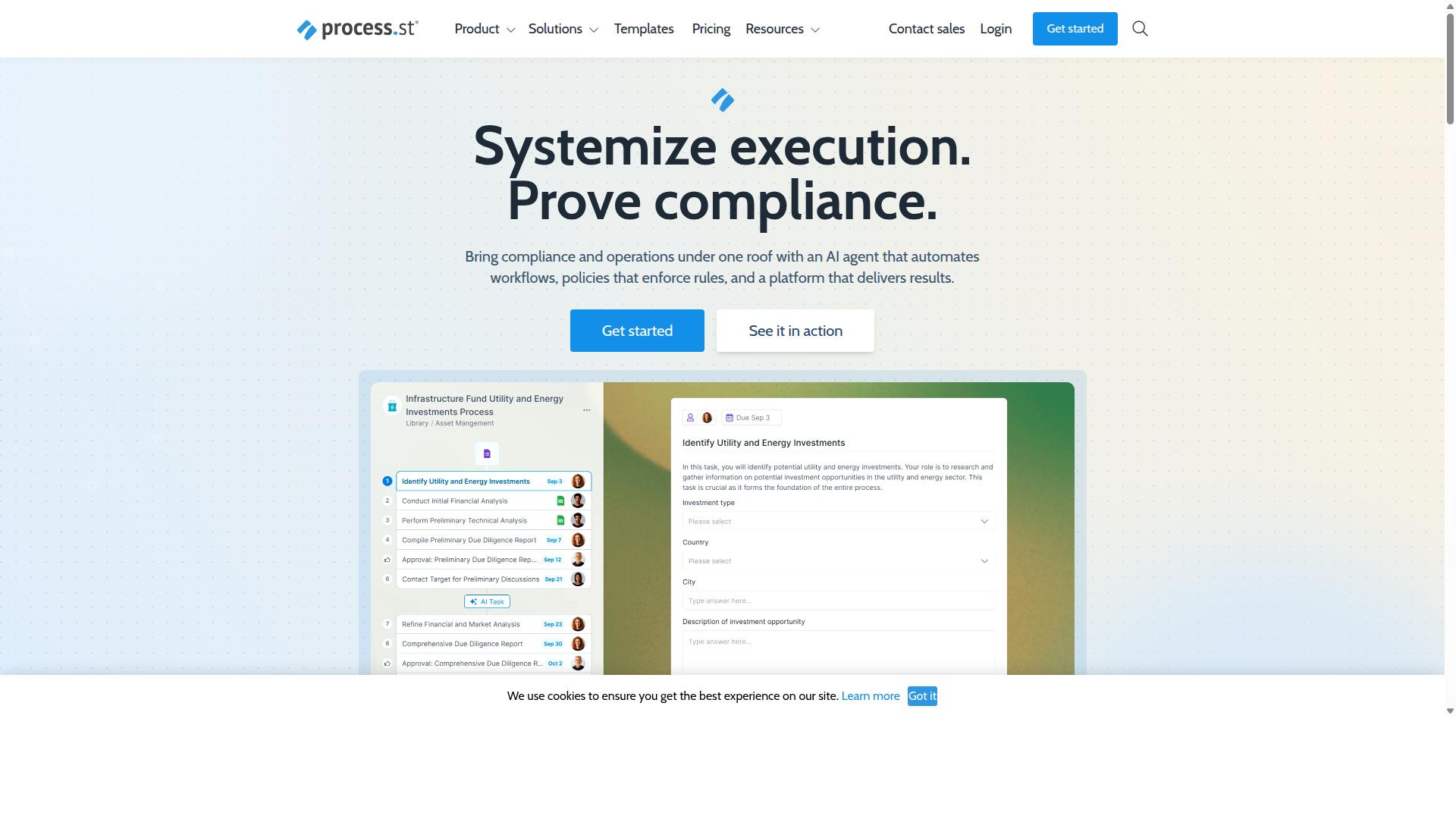
Process Street leads the comparison by combining policy control, workflow automation, and automated proof collection in a single platform.
The platform handles compliance operations across SOC 2, ISO 27001, and GDPR requirements without forcing teams to switch between multiple security tools. Users manage documentation, process orchestration, and risk monitoring through three integrated products.
Docs covers document management and policy governance. Ops converts policies into active workflows. Cora provides continuous compliance monitoring through AI-driven alerts and risk detection.
Key Features for Fast Implementation
Process Street supplies a library of SOC 2-, ISO 27001-, and GDPR-aligned templates that auto-populate workflows and control mapping.
Five template categories cover vendor risk, access reviews, incident response, policy attestation, and evidence collection. Each category includes pre-mapped controls that align with audit frameworks.
The API connects directly to AWS, Azure, and Slack for automatic evidence syncing. Teams eliminate manual data collection by pulling compliance artifacts from existing cloud and communication systems.
Integrations extend through Zapier, Microsoft Power Automate, Tray.io, and Make. This connectivity reduces setup friction when organizations already use these automation platforms.
Setup Time and Ease of Use
Teams launch their first automated workflow using the interactive setup wizard and shorter configuration cycles.
IMCD UK reported a 75% reduction in setup time after switching from manual processes. The timeline breaks down into clear stages: account creation takes two minutes, import pre-built controls requires eight minutes, OAuth connections complete in five minutes, role assignments finish in three minutes, and first evidence appears within twelve minutes.
The platform supports 3,000+ companies that have standardized their compliance operations. Average response time sits at five minutes with a 98% customer satisfaction rating.
Pricing and Value
The Startup plan is capped at five users yet still includes unlimited workflows, 100 automation actions monthly, and SOC 2 evidence collection.
Startup pricing falls within the $0-$100 range and supports 10 guests plus 10 connected apps. Pro and Enterprise tiers remove these limits and add SSO, custom roles, and dedicated success management.
ROI appears through time saved versus manual evidence gathering. Organizations report 30% faster documentation cycles and eliminate repetitive audit preparation tasks across their compliance teams.
2. Vanta
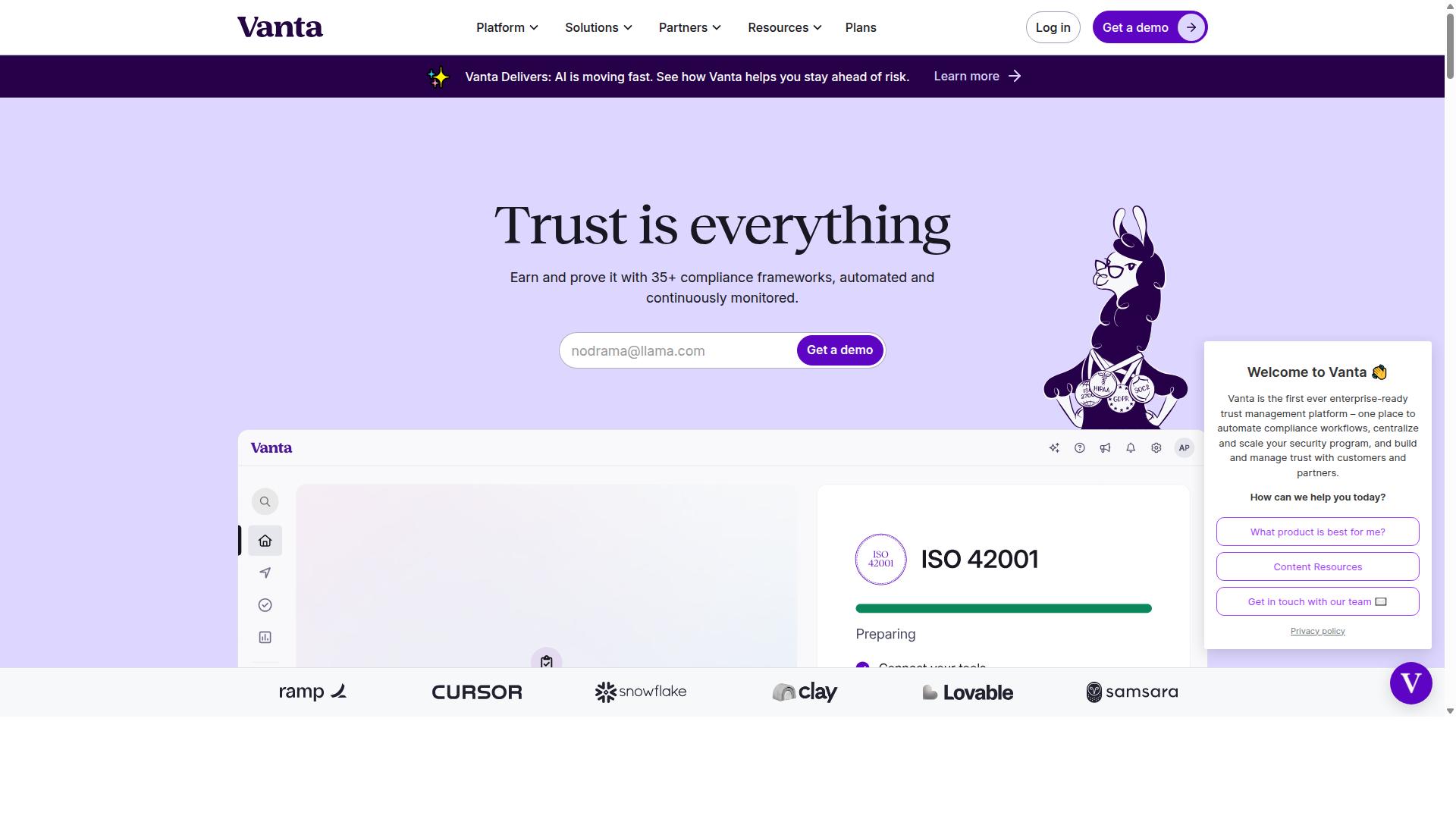
Vanta focuses on automated evidence gathering across cloud environments, but lacks native workflow orchestration for policy enforcement.
Teams often evaluate it when compliance automation needs to happen quickly. It supports SOC 2, ISO 27001, GDPR, HIPAA, HITRUST, and ISO 42001 frameworks. The platform serves startups through enterprise organizations in healthcare, fintech, and government sectors.
Public information shows Vanta automates evidence collection, audit preparation, security questionnaire responses, and continuous monitoring. It includes a Trust Center, Third Party Risk Management, AI Governance, Vanta AI, and an Agentic Trust Platform. These components help organizations maintain certifications across multiple standards.
More than 400 integrations allow connections to various systems and services. This broad connectivity supports evidence collection without manual data entry. Organizations use these features to reduce the time spent on routine compliance tasks.
Key Features for Fast Implementation
Vanta connects to common cloud providers to collect evidence continuously and flags non-compliant resources within minutes.
The platform integrates with AWS, GCP, Azure, and GitHub among other services. These connections enable evidence collection from infrastructure, code repositories, and cloud resources. Organizations can monitor multiple environments through a single dashboard.
Alerts arrive in near-real-time when compliance issues appear. The system identifies problems as they occur rather than during periodic reviews. This timing helps teams address issues before they affect certification status.
However, Vanta does not include a workflow builder for policy enforcement. Teams must handle policy implementation through other tools or manual processes. This gap may require additional systems when organizations need structured approval workflows.
Setup Time and Ease of Use
Most teams complete the initial cloud-account linking and baseline scan within one to two business days.
The onboarding process follows three main steps. First, users connect their cloud accounts and other integrated services. Second, the system reviews and auto-detects resources across connected environments. Third, teams invite colleagues to access the platform and begin review processes.
The interface presents compliance status through visual dashboards. Users can see current certification progress and outstanding items. This presentation reduces the learning curve for new team members.
Configuration focuses on selecting relevant compliance frameworks and confirming auto-detected mappings. The system handles most technical connections automatically. Manual intervention occurs mainly when custom resources require specific configuration.
Pricing and Value
Vanta's pricing is usage-based and typically starts in the mid-four-figure range per year for a single compliance framework.
Exact pricing tiers require direct quotes from the vendor. Organizations receive custom pricing based on their specific needs and scope. This approach means costs vary depending on company size and compliance requirements.
Add-on frameworks such as HIPAA and ISO 27001 incur incremental fees beyond base pricing. Each additional standard increases the total cost. Organizations planning multiple certifications should account for these extra charges when budgeting.
The platform positions itself as a compliance automation tool rather than a complete governance solution. Teams needing workflow orchestration or policy enforcement may require supplementary tools. This positioning affects the overall value calculation for organizations with complex compliance needs.
How to Choose the Right Option
First sentence: Match the tool's control depth and workflow reach to your team size, compliance scope, and automation maturity.
Team size shapes the level of governance and automation you actually need. Smaller groups often run with fewer standardized procedures while larger organizations face more complex control requirements across multiple departments.
A four-row decision matrix helps surface the right fit. Consider team size under 20 versus over 20, policy-to-workflow automation needs, multi-framework coverage, and budget threshold.
| Team Size | Policy Automation | Multi-Framework | Budget Focus | Recommended Path |
|---|---|---|---|---|
| Under 20 | Yes | Yes | Moderate | Process Street for Operations, HR, and Compliance teams |
| Under 20 | No | No | Low | Simpler governance tools with basic templates |
| Over 20 | Yes | Yes | High | Process Street for ISO compliance, document control, and custom workflows |
| Over 20 | No | No | Moderate | Lightweight options focused on single frameworks |
Process Street serves teams in Operations, Customer management, Compliance, Human resources, Finance, IT and security. These groups use the platform for employee onboarding, client onboarding, ISO compliance, quality tracking, document control, and custom workflows across financial services, real estate, manufacturing, healthcare, professional services, technology, capital markets, and property management.
When rapid setup matters, look for solutions that offer pre-built controls and template libraries. Scrut Automation alternatives often vary in depth of workflow automation and framework coverage.
Process Street stands out for teams that need policy-to-workflow automation with support for multiple compliance frameworks. The platform scales across both smaller groups and larger organizations that require structured processes for audit readiness and continuous monitoring.
Final Verdict
Process Street delivers the fastest path to automated, audit-ready compliance for teams that also need workflow orchestration.
Teams switching from Scrut Automation report 75% faster setup and 30% faster documentation across their compliance programs.
The platform holds SOC 2 Type II certification and ISO 27001 certification, giving organizations the security assurances they need for sensitive data handling.
These credentials matter when companies manage vendor risk, evidence collection, and policy enforcement across multiple frameworks like GDPR and HIPAA.
Process Street serves more than 3,000 companies and over one million users who standardize critical processes such as employee onboarding.
IMCD UK measured a 75% reduction in their setup time after adopting the platform, confirming the speed advantage in production environments.
The software maintains compliance with GDPR, CCPA, and AWS CIS standards while keeping customer data separate from AI training models.
Support response times average five minutes with a 98% customer satisfaction rating, ensuring teams get help when they need it during migration projects.
Organizations evaluating alternatives to Scrut Automation can reach the sales team through chat or email to schedule a guided demo that shows exactly how Process Street handles their specific compliance requirements.
Recommended Resources: