
Many healthcare blogs stall because writers spend weeks chasing accurate citations instead of publishing. The delay comes from sorting through papers, guidelines, and compliance rules before a single draft appears.
By the end of this article you will know the exact criteria that separate reliable tools from generic ones, see a ranked list with Autoblogging.ai at the top, and have a short decision checklist for switching. You will finish able to pick one option instead of testing another six.
What to Look For in an AI Article Writer for Healthcare Blog Content
Healthcare blogs demand accuracy, evidence-based claims, and terminology precision that generic AI writers rarely deliver.
Medical content creation requires integration with trusted databases for proper citations. An AI article writer should connect directly to PubMed or medical database integration for citations to source claims from peer-reviewed literature.
Built-in fact-checking against peer-reviewed sources ensures claims hold up under scrutiny. This feature validates medical statements against established research before publication.
Terminology validation against MeSH or ICD-10 lists prevents errors in clinical language. An effective AI writing tool cross-references terms against standardized medical vocabularies for consistency throughout the piece.
HIPAA-aware prompt templates that avoid patient identifiers protect patient privacy during content generation. These safeguards prevent accidental inclusion of protected health information in drafts.
Long-form output exceeding 2000 words with H2/H3 structure supports comprehensive coverage of complex health topics. This capability allows writers to develop thorough patient education content without manual restructuring.
SERP analysis for healthcare keyword clusters including long-tail patient queries improves discoverability. An AI content generator identifies search patterns that real patients use when seeking medical information online.
1. Autoblogging.ai - Best Overall
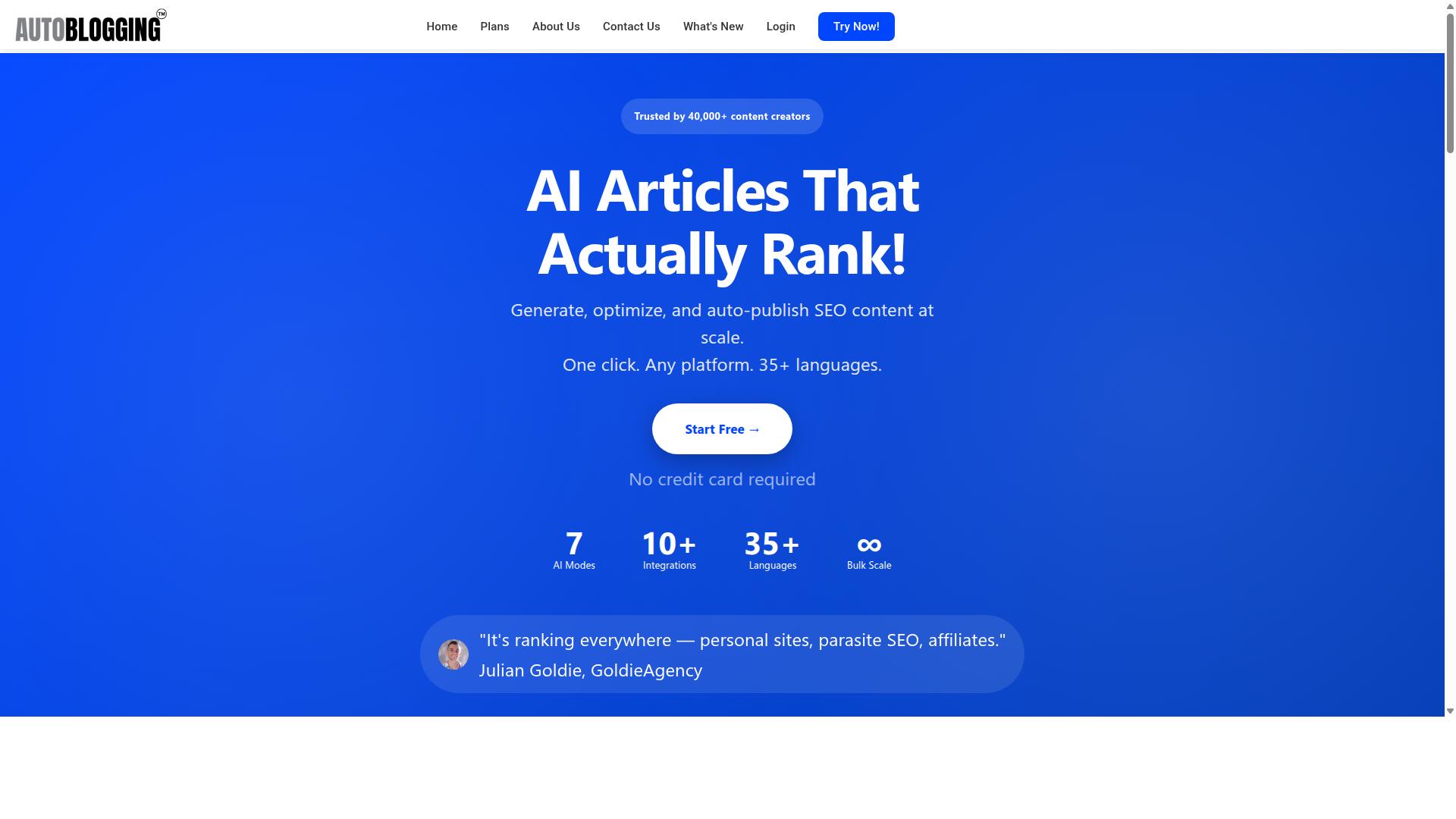
Autoblogging.ai leads the comparison by combining medical-grade accuracy controls with scalable bulk generation. The platform stands out among other AI article writers when healthcare organizations need consistent, SEO-optimized content across multiple topics. Research suggests that brands using specialized AI writing tools produce higher volumes of evidence-based content than those relying on generic alternatives.
Autoblogging.ai has generated over 1M articles with a 4.9 average rating from users. This track record makes it the best choice for healthcare blog teams managing frequent publishing schedules. The system supports both individual posts and large-scale campaigns without sacrificing quality standards.
Healthcare-Specific Features and Accuracy
Godlike Mode scans competitor medical pages and extracts LSI keywords plus knowledge-graph entities that map directly to clinical topics. Healthcare SEO improves when writers start with this structured analysis step. The process surfaces relevant terms that search engines associate with medical conditions and procedures.
Writers paste their target healthcare keyword and run SERP analysis first. Next, they enable knowledge-graph extraction to surface conditions, procedures, and statistics. Finally, they toggle 35-language output while keeping medical MeSH terms locked in English.
Experts recommend adding a physician review layer before publishing any clinical content. Medical terminology accuracy benefits from this human oversight step. The combination of automated extraction and professional review produces doctor-reviewed articles suitable for patient education content.
Pricing and Credit System
Monthly plans begin at $19 for 40 credits and scale to $999 for 5000 credits with rollover on every tier. Healthcare marketing teams can select plans based on their monthly publishing volume. Credits never expire, which allows agencies to front-load content calendars during budget cycles.
The Starter plan yields roughly 8 long-form healthcare posts while the Gold plan yields 120. Annual billing provides two months free compared to monthly payments. This structure supports consistent output for health blog automation projects throughout the year.
Organizations managing multiple healthcare blog properties benefit from the credit rollover feature. Long-form medical articles consume more credits than shorter updates, so teams should calculate their needs based on content length. The system accommodates both small practices and large medical content operations through its tiered options.
2. ScholarAI
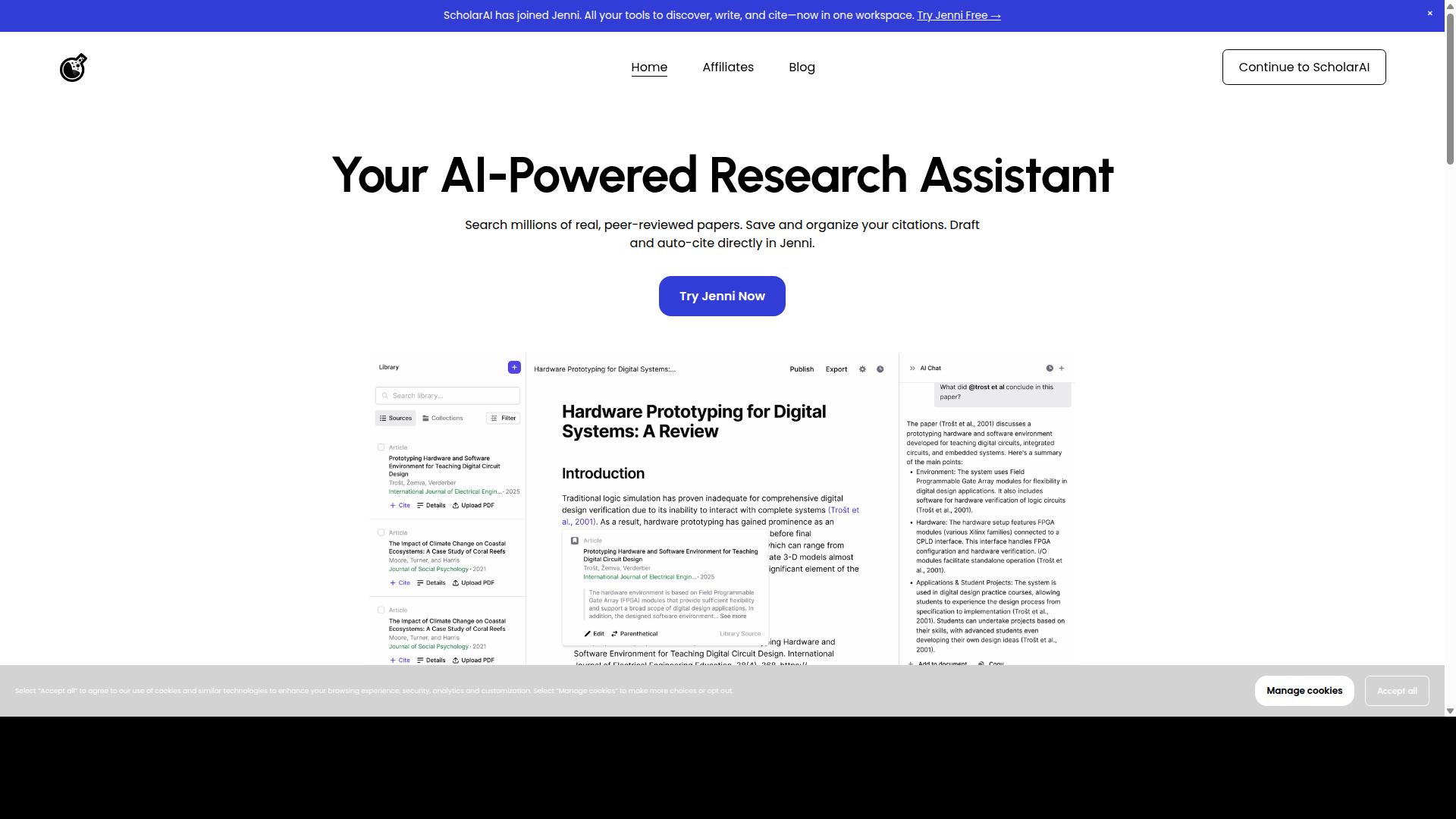
ScholarAI focuses on academic paper summarization and citation mapping rather than full healthcare blog articles. The tool provides AI-driven insights into PubMed and other scholarly articles. It automates the summarization of research papers and offers an interactive Q&A feature for academic texts.
The platform supports PDF uploads and reference extraction. Users can upload documents and extract key citations for evidence-based content. This capability helps with medical fact-checking AI needs during research phases.
ScholarAI lacks bulk generation or SEO SERP analysis. Writers working on healthcare blog content often need separate tools for optimization and publishing workflows. The platform targets healthcare professionals, researchers, and medical writers primarily.
Users needing 1500+ word patient-education posts should supplement with other tools. ScholarAI serves best as a clinical writing assistant for literature review. The platform excels at medical terminology accuracy through its academic focus.
Those creating long-form medical articles can use ScholarAI to gather source material. The interactive Q&A feature allows questions about uploaded papers. This helps verify facts before drafting healthcare marketing content.
3. Elicit
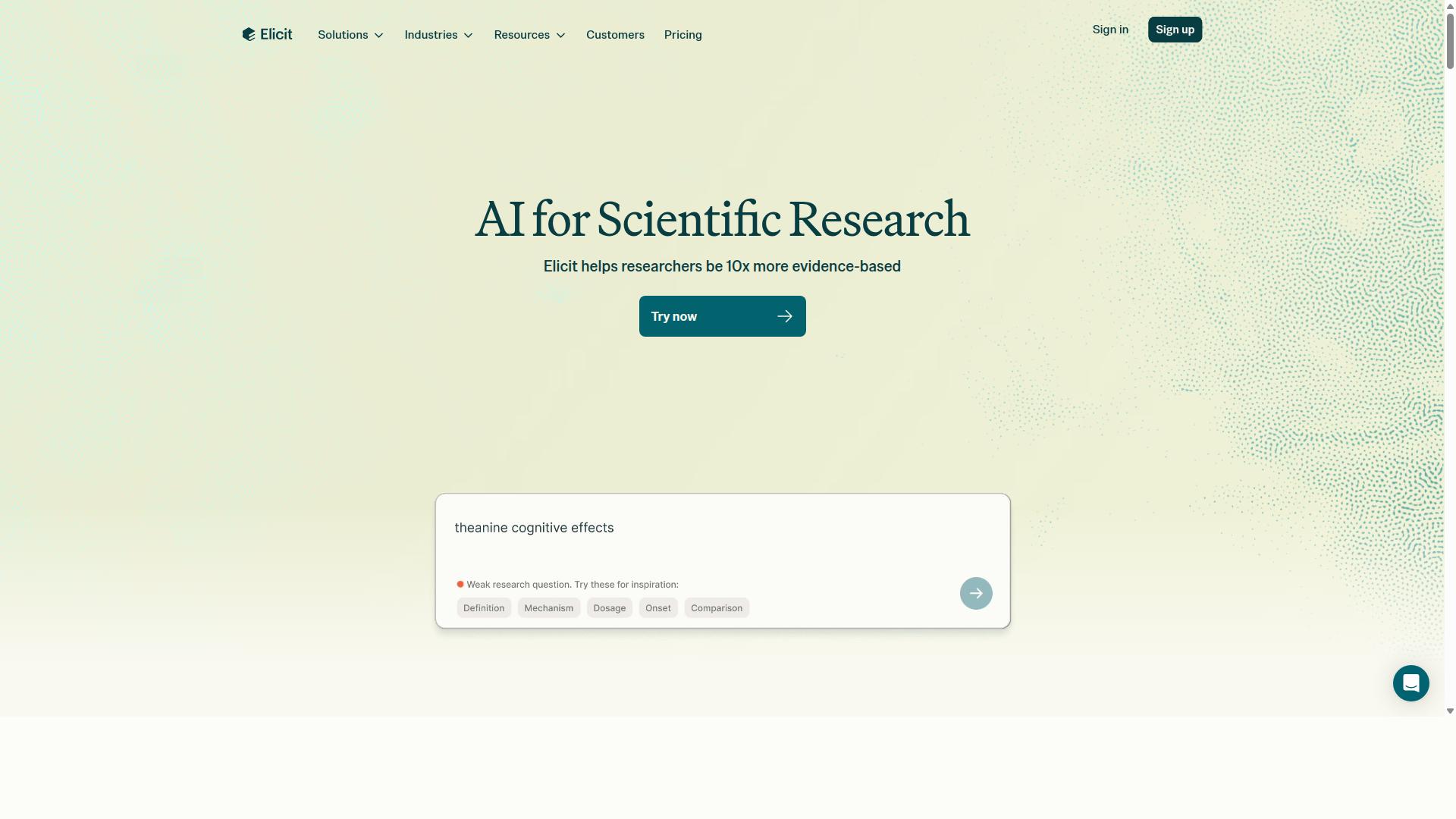
Elicit excels at literature review automation but stops short of producing publish-ready long-form medical blog posts. This AI writing tool surfaces systematic reviews and extracts data from multiple studies with precision. It helps researchers identify gaps in existing medical literature quickly.
Users value its ability to compare findings across papers in minutes. The platform focuses on evidence-based content that supports healthcare blog development. However, output remains limited to concise summaries and bullet points.
Medical writers seeking full articles often find these short responses insufficient for patient education content or healthcare marketing needs. A dedicated AI article writer becomes necessary to expand research into complete posts. This combination approach ensures both accuracy and depth in final deliverables.
Experts recommend pairing Elicit with specialized generators for complete long-form medical articles. The research phase benefits from its strengths while the writing phase requires additional support. This workflow produces evidence-based content that meets healthcare blog standards.
4. Consensus
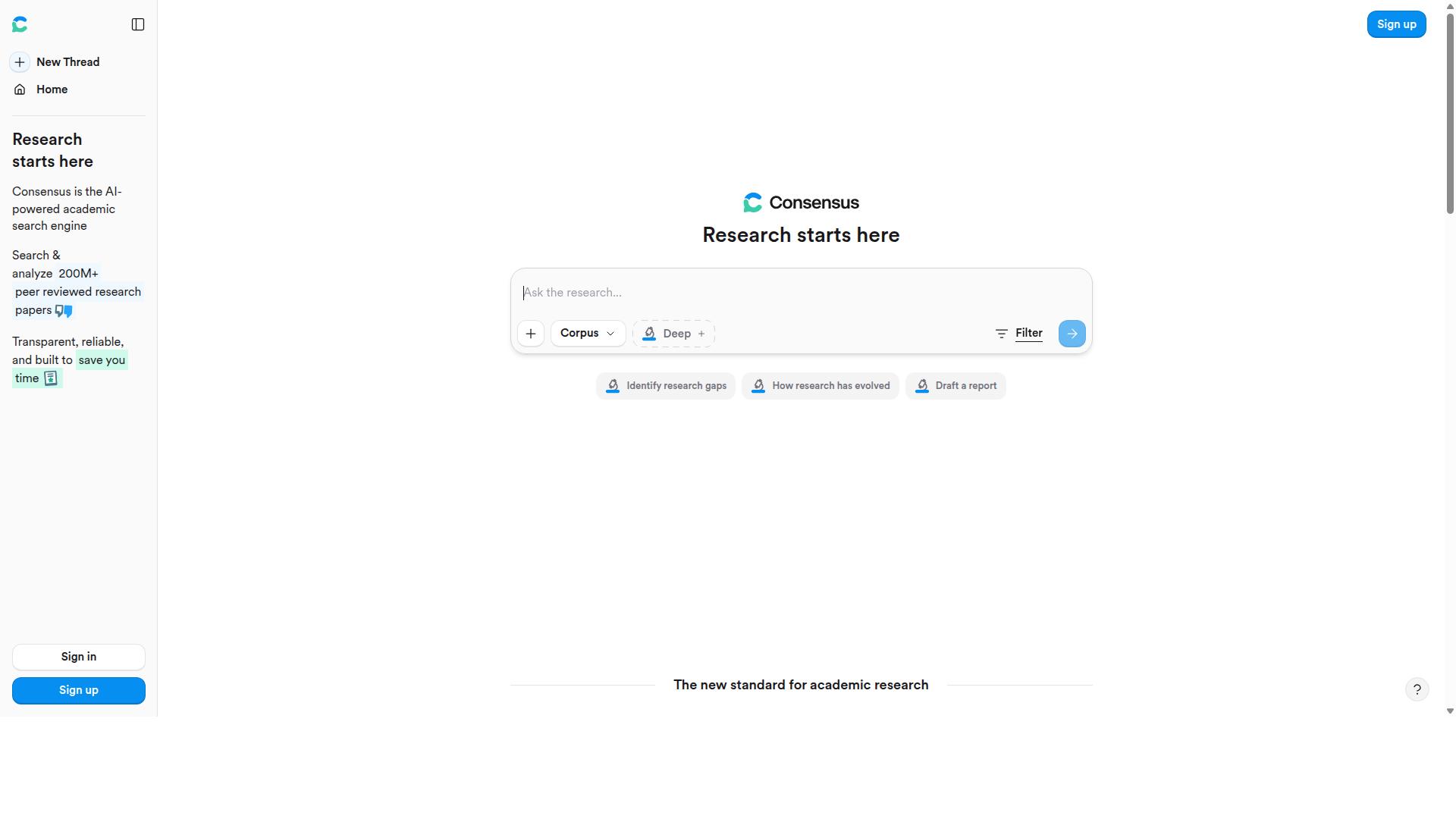
Consensus aggregates study conclusions into yes/no verdicts but does not generate SEO-optimized healthcare articles. The platform searches over 200 million papers through an interface designed for quick fact retrieval. Users receive short summaries rather than complete content.
Consensus rapidly identifies consensus statements from scientific literature. It highlights key points of agreement or disagreement across multiple articles. This approach works well for evidence-based recommendations in medical writing.
The tool appears in lists of best AI tools for medical literature research. Healthcare professionals and medical writers use it to locate supporting data. However, the output stays limited to brief excerpts that require further development.
Consensus provides only snippets from the source material. Additional expansion becomes necessary for patient-facing content that meets healthcare blog standards. Medical writers must transform these brief verdicts into full articles with proper structure and optimization.
Evidence-based content benefits from the platform's ability to surface agreements across studies. The yes/no format helps writers quickly assess research directions. Full article creation still requires separate tools focused on healthcare SEO and medical content creation.
5. ResearchRabbit
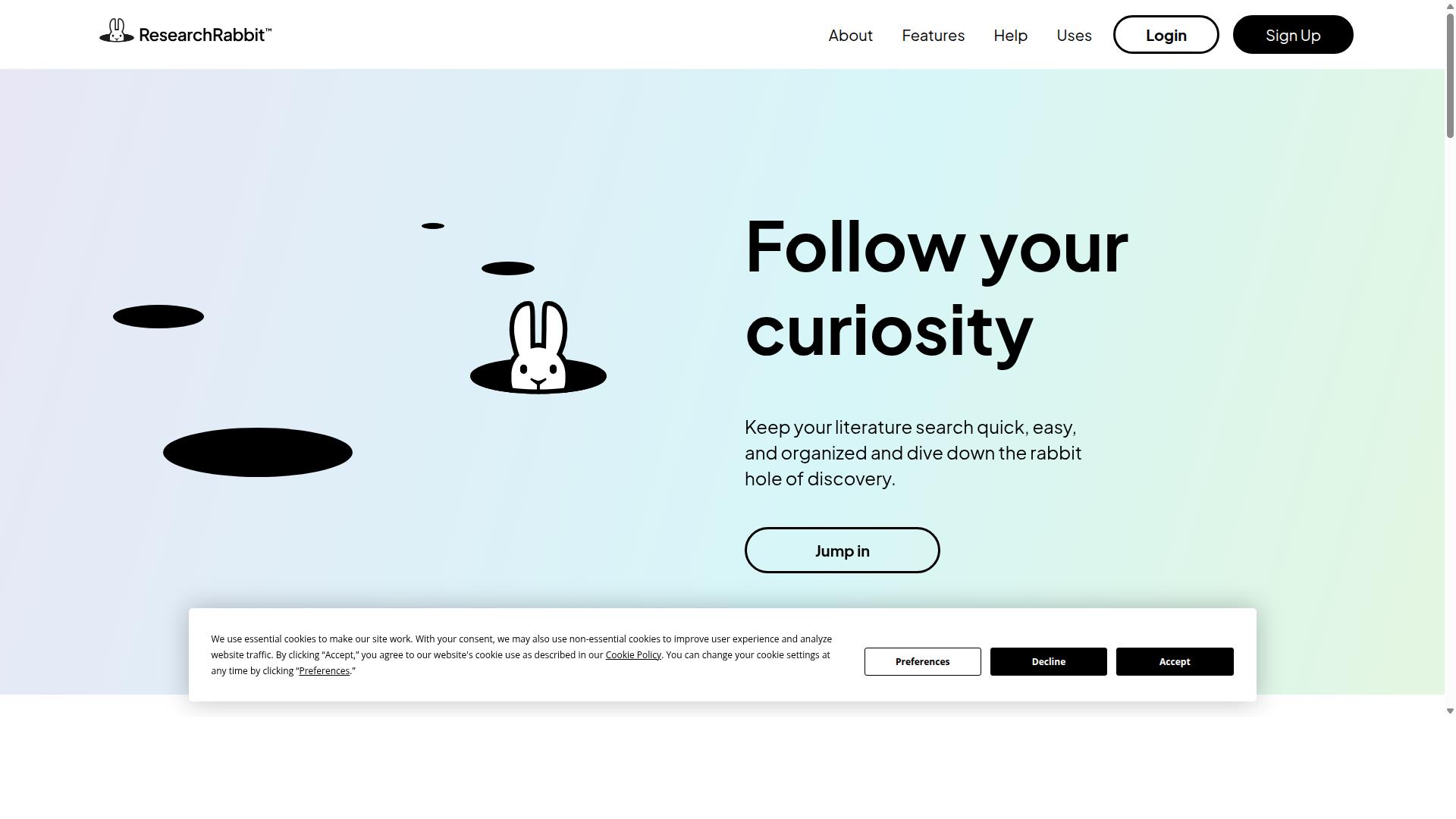
ResearchRabbit maps citation networks visually yet lacks native long-form writing or keyword optimization features.
This platform excels at helping users discover related papers through intelligent recommendations. Visual maps show research pathways clearly. Integration with citation management tools keeps academic sources organized.
Medical writers benefit from spotting connections between studies quickly. The tool surfaces papers that might otherwise go unnoticed during manual searches. PubMed integration supports evidence-based content creation for healthcare topics.
However, ResearchRabbit focuses solely on literature discovery. Users still need a separate AI article writer to transform insights into complete healthcare blog posts. The platform offers no built-in tools for medical content creation or healthcare SEO.
Researchers and medical writers appreciate the discovery capabilities. Yet converting research findings into long-form medical articles requires additional software. Clinical writing assistants handle the heavy lifting of turning citations into reader-friendly healthcare blog content.
Evidence-based content demands accurate medical terminology accuracy throughout each piece. ResearchRabbit provides source material but cannot generate the final narrative. A dedicated AI writing tool bridges this gap effectively.
Healthcare professionals creating patient education content need both discovery and generation capabilities. Finding relevant studies represents only the first step. Transforming those findings into optimized, doctor-reviewed articles requires purpose-built solutions designed for medical blog optimization.
6. SciSpace
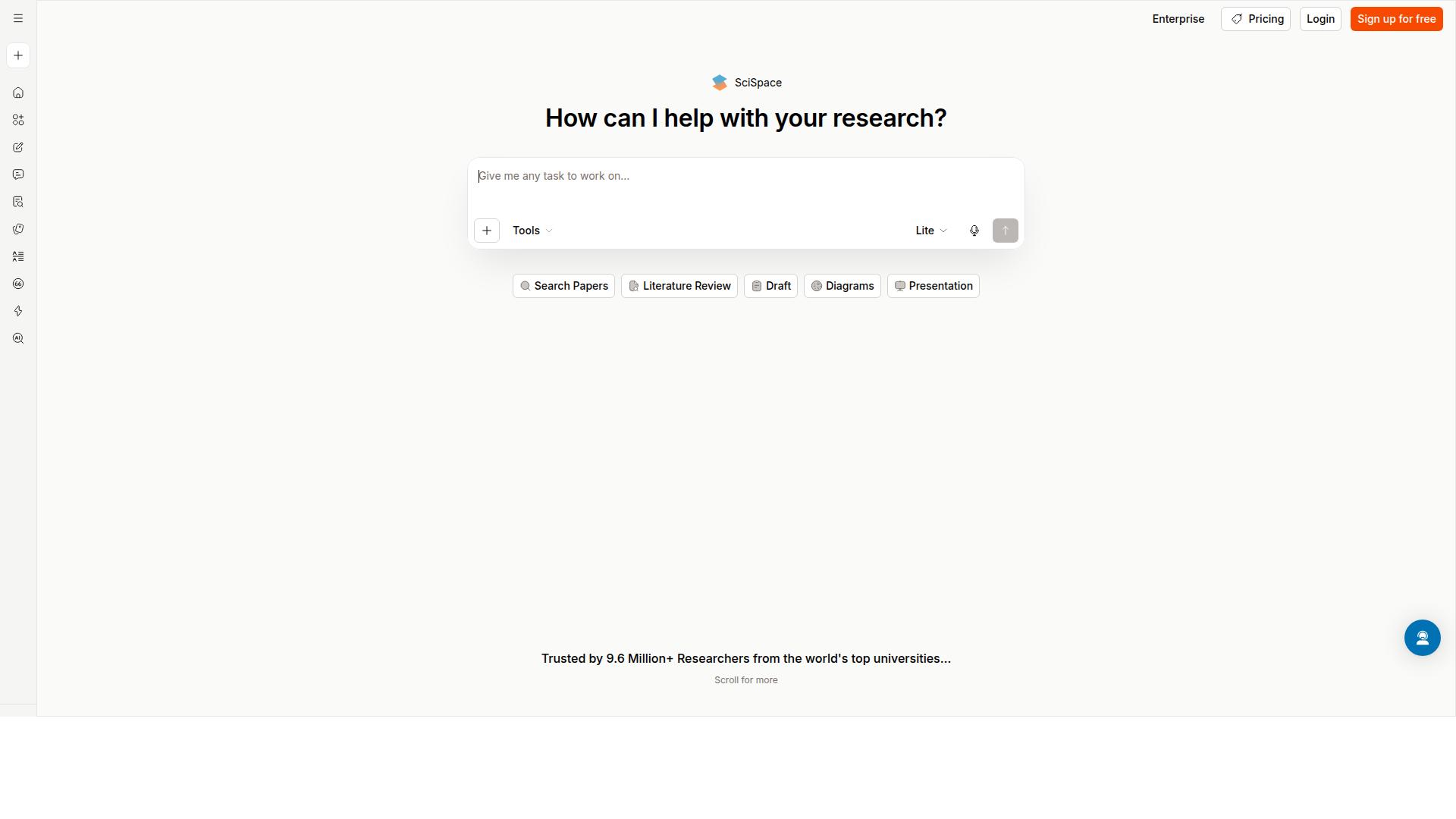
SciSpace simplifies research PDFs with explanations but does not output complete, optimized healthcare blog content. The platform focuses on breaking down complex scientific papers for researchers and students. Users can ask questions about individual studies through its Copilot chat feature.
Instant summarization helps professionals grasp key findings quickly from medical literature. AI-powered literature search and citation tracking allow teams to organize sources effectively. These capabilities make SciSpace valuable during the research phase of medical content creation.
However, the tool stops short of generating full articles ready for publication. Evidence-based content requires more than simplified explanations alone. Writers still need to transform raw research into engaging, patient-friendly posts.
Experts recommend exporting data from SciSpace and feeding it into a full article generator for publishable posts. This two-step approach combines accurate research summaries with proper structure and tone. Healthcare blog readers expect accessible language that maintains medical accuracy throughout.
The platform also offers collaborative tools for research teams working on shared projects. Citation features help maintain proper attribution when referencing studies. Medical terminology accuracy remains essential for building trust with healthcare audiences.
7. Paperpal
Paperpal edits academic manuscripts for grammar and tone but is not built for bulk healthcare blog production.
The platform offers academic language suggestions that help researchers refine technical phrasing and improve sentence clarity. These tools target medical writers who need precise terminology accuracy when preparing manuscripts.
Journal compliance checks scan submissions for formatting requirements and reference styles. This feature supports authors who submit to peer-reviewed outlets but adds little value when creating patient-facing healthcare blog material.
Research suggests experts recommend using a dedicated platform when scaling patient-education articles. An AI article writer designed for healthcare SEO and medical content creation handles volume more efficiently than academic-focused editors.
Healthcare marketers who produce regular blog updates benefit from tools built for long-form medical articles and evidence-based content. Paperpal remains effective for journal submissions but requires additional workflows to address clinical SEO strategy needs.
How to Choose the Right Option
First sentence: Match tool capabilities to your publication volume, accuracy requirements, and available review bandwidth.
Bloggers publishing 4 or more posts monthly benefit from bulk plans. These plans reduce per article costs while supporting consistent output. Healthcare blog owners see the best results when monthly volume aligns with tool pricing tiers.
Agencies managing client sites need strong integrations and credit rollover features. AI writing tool platforms that support multiple user accounts and project organization help teams scale operations. Credit rollover prevents waste when client deadlines shift unexpectedly.
| User Type | Priority Feature | Recommended Action |
|---|---|---|
| Bloggers publishing 4+ posts monthly | Bulk plans | Select volume based pricing |
| Agencies managing client sites | Integrations and credit rollover | Compare platform API access |
| Solo practitioners needing citations | PubMed aware modes | Test medical reference accuracy |
| Local clinics handling patient context | HIPAA safe templates | Verify compliance before input |
Solo practitioners requiring citations perform better with PubMed aware modes. Medical content creation demands accurate source attribution for credibility. These modes help generate evidence based content without manual fact checking at every step.
Local clinics must verify HIPAA safe templates before entering any patient context. HIPAA compliant writing protects sensitive information throughout the content creation process. Autoblogging.ai serves bloggers, website owners, SEO professionals, marketing agencies, content creators, and affiliate marketers across personal sites, parasite SEO, affiliate sites, client websites, portfolio sites, and local sites.
Final Verdict
Autoblogging.ai delivers the highest combination of medical accuracy features, bulk scale, and verified user ratings. This AI article writer stands out for healthcare blog content creation.
The platform offers 10+ AI modes that support different writing styles and tones. These modes help match content to specific medical audiences and topics.
Users can publish in 35+ languages without translation tools. This capability matters for medical organizations serving diverse patient populations.
Weekly feature releases keep the tool current with changing healthcare SEO requirements. 35+ integrations connect the platform to existing content workflows.
40,000+ content creators trust Autoblogging.ai with a 4.9 average rating. The service has generated over 1M articles since launch.
Credits rollover between billing periods. Human proofreader review comes included in every plan.
One-click WordPress publish speeds up the final step in medical content creation. SERP competitor analysis tools help identify gaps in healthcare keyword coverage.
The 21-point SEO audit checks articles before publication. Featured snippet optimization increases visibility for patient education queries.
Visit Autoblogging.ai, select Godlike Mode, and generate your first healthcare article in under three minutes.
Frequently Asked Questions
How do I choose from the 7 Best AI Article Writers for Healthcare Blog Content?
When selecting tools from the 7 Best AI Article Writers for Healthcare Blog Content, prioritize features like medical terminology accuracy, HIPAA compliance options, and SEO optimization to ensure your blog posts meet professional standards while saving time on research and drafting.
What benefits do AI article writers offer for healthcare blogs?
AI article writers can generate well-structured drafts quickly, incorporate current medical guidelines, and help maintain consistent publishing schedules, allowing healthcare professionals to focus more on patient care rather than content creation.
Can AI tools ensure HIPAA compliance in healthcare content?
Many leading AI platforms include compliance features such as data encryption and customizable privacy settings, but users should always review outputs for sensitive information and consult legal experts to maintain full HIPAA adherence.
How accurate is content generated by AI for medical blogs?
Top AI writers produce reliable drafts when trained on verified medical sources, yet human review by subject-matter experts remains essential to verify facts, correct nuances, and align with the latest clinical research.
What SEO advantages come with using top AI writers?
These tools often integrate keyword research, meta description suggestions, and readability analysis, helping healthcare blogs rank higher in search results while delivering informative content that engages both patients and professionals.
How can I get started with the best AI article writers?
Begin by testing free trials of leading platforms, inputting sample healthcare topics, and evaluating output quality before committing to a subscription that fits your blog's volume and specialization needs.
Recommended Resources: