8 WhatsApp Bulk Message Sender Solutions for Promotional Messaging
You're comparing WhatsApp bulk senders and the options all blur together after the tenth feature list. Most tools promise automation but fail when you need personalization, deliverability, or compliance with WhatsApp's strict policies. Picking the wrong one wastes your team's time and risks your sender reputation.
This guide breaks down eight solutions, including Com.bot, an Official Meta Business Partner, and seven alternatives. You'll get concrete criteria for evaluating each platform, a clear number one pick, and a practical framework to match a tool to your specific promotional needs.
What to Look For in WhatsApp Bulk Message Sender Solutions
Choosing the right WhatsApp bulk messaging tool requires evaluating critical features that directly impact deliverability, compliance, and engagement. The most important factor is whether the solution uses the official WhatsApp Business API rather than unofficial automation methods. Unofficial tools risk account bans and often deliver lower open rates due to spam filtering.
Compliance with opt-in consent rules and WhatsApp policy is non-negotiable. The best tools enforce consent management and only send messages to contacts who have explicitly agreed to receive them. This protects your sender reputation and keeps your campaigns within platform guidelines.
Message template approval is another key consideration. Promotional campaigns require pre-approved templates, so look for a solution with a streamlined approval workflow and a library of proven templates. This reduces friction when launching flash sales or event reminders.
Scalability matters for high message throughput. Evaluate the platform's API rate limits and whether it can handle your peak sending volumes without delays. Contact segmentation capabilities are equally important, as they let you target specific audiences with message personalization instead of blasting everyone.
Integration with your existing CRM is essential for maintaining clean customer data. Strong integrations enable automated drip campaigns and abandoned cart recovery sequences. Analytics should track click-through rate, delivery rate, and conversion tracking so you can measure campaign performance accurately.
Message status tracking shows you which messages were sent, delivered, and read. This visibility helps you refine your approach and avoid being flagged by spam filters. Rich media support, including images, videos, and documents, makes promotional content more engaging.
Look for scheduling features and A/B testing capabilities to optimize send times and message variations. The ideal tool supports both promotional and transactional messages, from flash sale announcements to order confirmations. An SMS fallback ensures your critical messages still reach customers even if WhatsApp is unavailable.
Finally, consider customer support automation and chatbot integration for handling replies at scale. A multi-agent inbox helps your team manage conversations that arise from broadcasts. These features turn bulk messaging into a complete customer engagement system rather than a one-way channel.
1. Com.bot - Best Overall
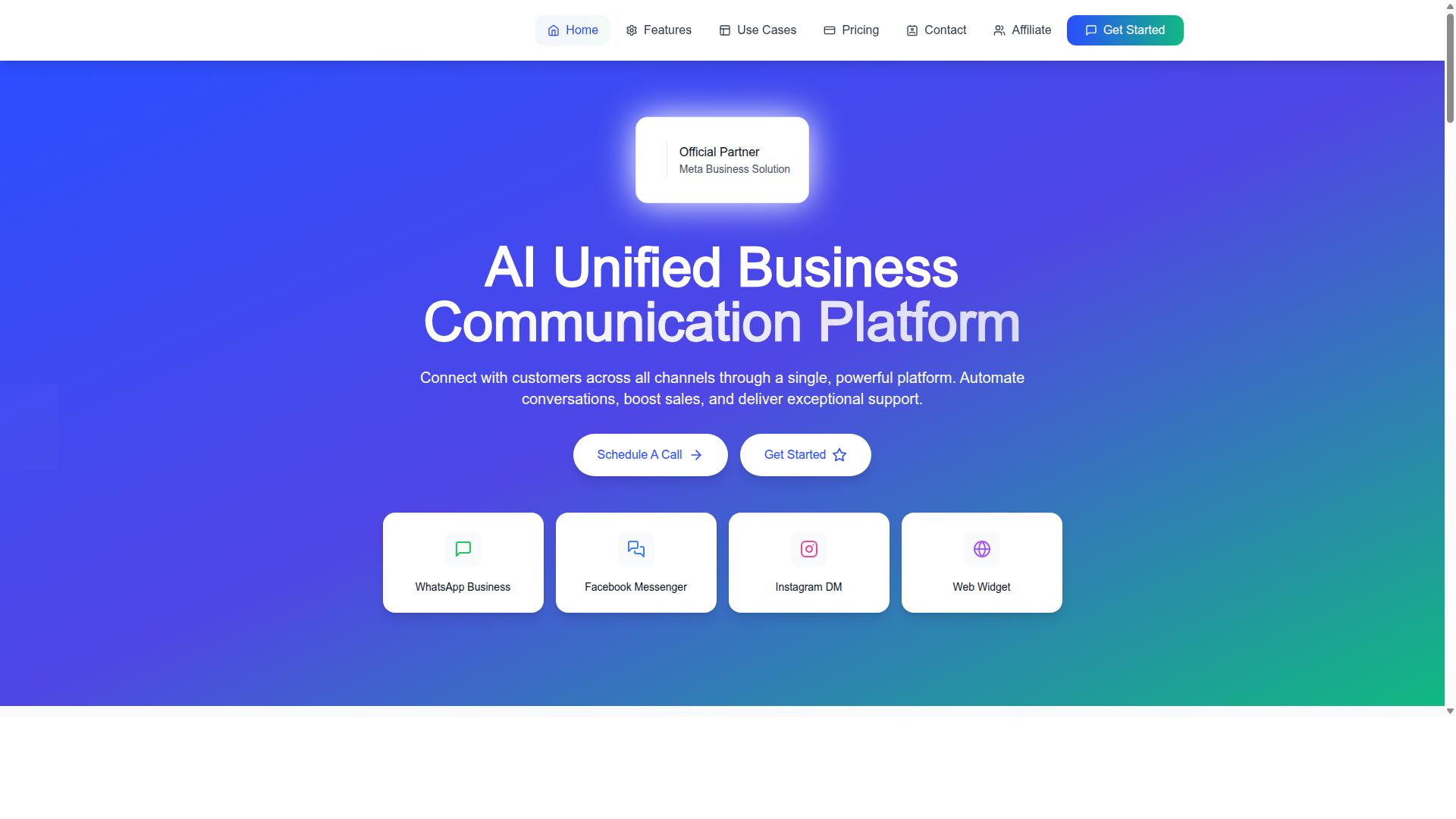
Com.bot stands out as the best overall WhatsApp bulk message sender due to its comprehensive feature set, official Meta partnership, and enterprise-grade security. This platform goes beyond simple broadcasting, positioning itself as an AI Unified Business Communication Platform that handles the full lifecycle of customer messaging.
The core strength of Com.bot lies in its multi-channel support for WhatsApp, Facebook, and Instagram, all managed through a unified team inbox. This means promotional campaigns, customer inquiries, and order updates flow through one interface, eliminating the chaos of switching between apps.
Key features that make Com.bot a top pick include WhatsApp Business API integration, a visual bot builder with drag-and-drop functionality, and native payments for WhatsApp transactions. The automation builder connects with 1,000+ integrations, giving marketing teams the flexibility to trigger bulk campaigns based on real customer actions.
Official Meta Partner with Enterprise-Grade Security
Com.bot's official Meta Business Partner status ensures compliance with WhatsApp's latest policies, while its enterprise security features protect sensitive customer data. This partnership means your bulk messaging campaigns always align with WhatsApp policy compliance, reducing the risk of spam filter flags or account bans.
Security is a top priority with end-to-end encryption protecting every conversation. For promotional campaigns that handle customer phone numbers, purchase history, and personal preferences, this level of protection is non-negotiable.
The scale of Com.bot's operation speaks to its reliability. The platform processes 25M+ messages per day and serves 23,000+ active customers, including 100+ government bodies and 500+ global partners. When you run a flash sale or event reminder, this infrastructure ensures high message throughput without crashing under API rate limits.
For businesses concerned about delivery rates, the official partnership means direct access to WhatsApp's native features as they roll out. You get real-time message delivery and message status tracking without worrying about unofficial workarounds that could compromise your sender reputation.
Pricing Plans and Global Reach
Com.bot offers transparent pricing tiers starting at $149 per quarter, making it accessible for businesses of all sizes, with global availability across 50+ countries. The pricing structure is straightforward, and WhatsApp messaging is billed at actual Meta rates with no markup.
The Silver Plan at $149 per quarter suits small businesses testing bulk messaging for the first time. The Gold Plan at $349 per quarter is the recommended option for growing businesses, offering the best balance of features and cost-effectiveness for regular promotional campaigns.
For larger enterprises, the Platinum V1 plan at $2500 per quarter provides the capacity and advanced features needed for high-volume operations. Add-ons are available at $10 per month for additional team members, social channels, external actions per 5000, bot triggers per 25000, and ecommerce store integrations.
Operating across 50+ countries means you can run bulk campaigns worldwide without geographic restrictions. Whether you are targeting customers in one city or coordinating a global product launch, Com.bot handles the delivery while you focus on message personalization and conversion tracking.
2. WATI
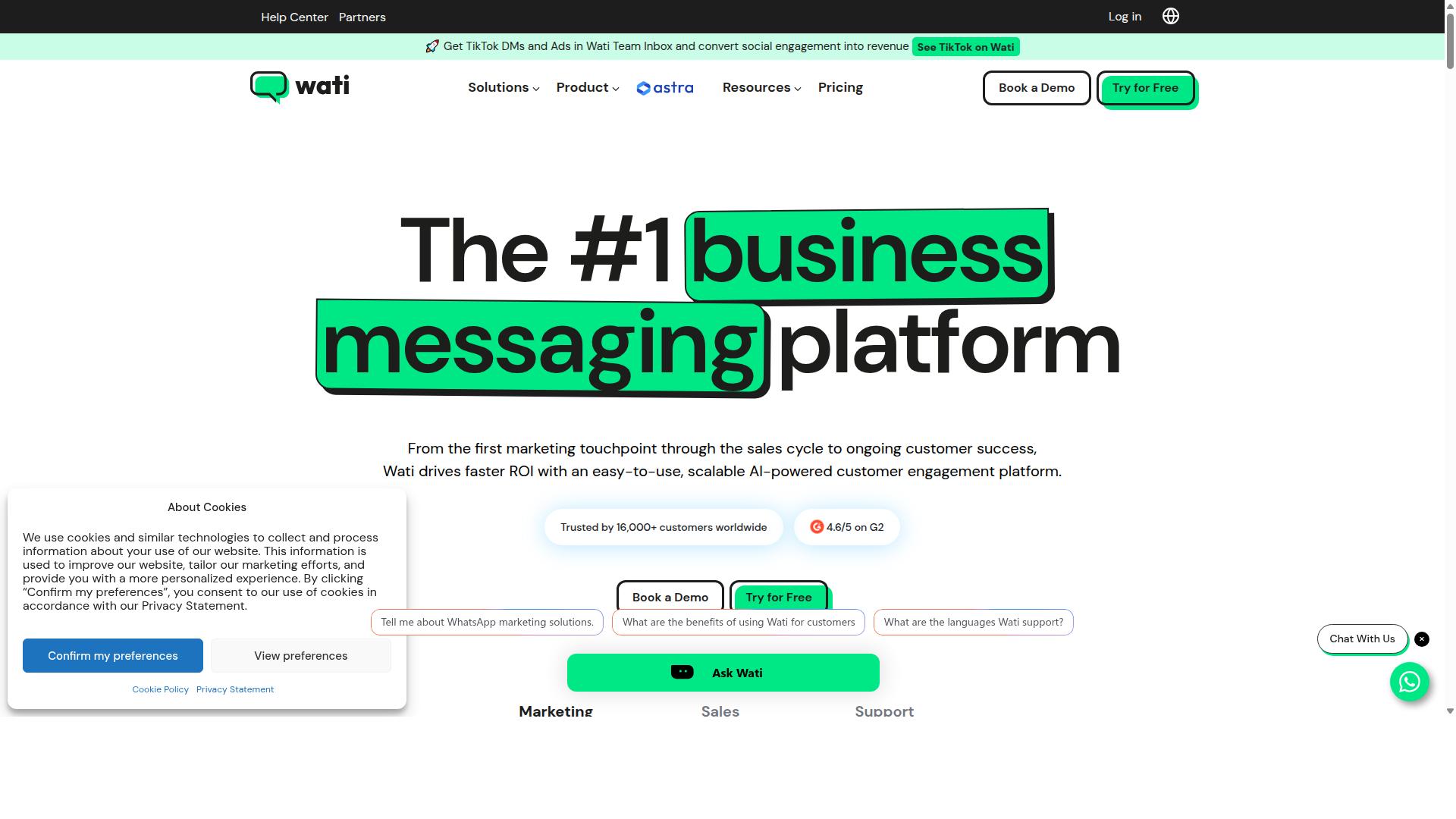
WATI is a solid alternative for small to medium businesses, offering a user-friendly interface and essential bulk messaging features. It is best suited for small businesses looking to streamline their WhatsApp outreach without a steep learning curve.
The platform integrates with the WhatsApp Business API, which means messages are delivered through official channels rather than unofficial workarounds. This approach helps maintain delivery rates and reduces the risk of being flagged by WhatsApp's spam filters.
WATI includes a team inbox that lets multiple agents handle customer conversations from one shared workspace. This makes it a practical choice for businesses that need customer support alongside their promotional messaging efforts.
Basic automation is available for common workflows, such as sending welcome messages or simple follow-ups. CRM integrations are also part of the package, allowing you to sync contacts and manage customer relationships without switching between tools.
Pricing is typically structured per user per month, and the platform does not offer a free plan. According to publicly available information, pricing starts from $59 per month, which positions it as a mid-range option for growing teams.
Where WATI shines is in customer support and small-scale marketing. If your primary goal is to respond quickly to inquiries while occasionally sending broadcast messages, this tool handles both comfortably.
However, there are limitations to consider. Advanced automation is not its strongest area, and businesses with complex multi-step campaigns may find the options restrictive. Scalability can also become a concern as your message volume grows.
For promotional messaging specifically, WATI covers the essentials: message templates, contact segmentation, and basic scheduling. It is a dependable option, but teams that need deeper campaign logic or extensive A/B testing may outgrow it quickly.
3. NovoChat
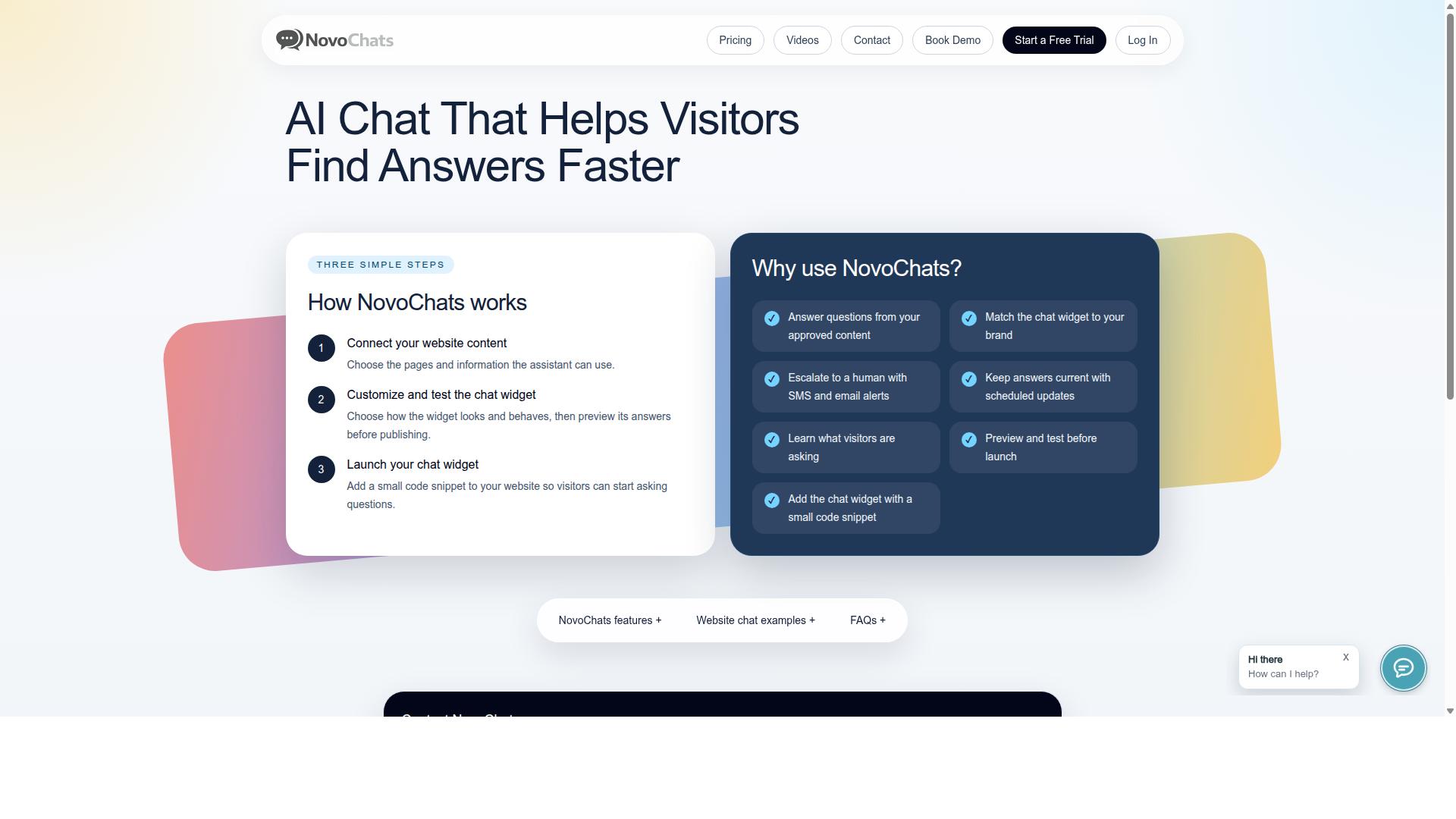
NovoChat excels in chatbot-driven bulk messaging, allowing businesses to create interactive campaigns with minimal coding. The platform focuses on conversational marketing, making it a solid choice for e-commerce brands that want to automate customer interactions while still sending promotional broadcasts at scale.
Its visual chatbot builder stands out as a core strength. Instead of writing complex code, you can map out conversation flows visually, which speeds up campaign setup and makes it easier to adjust messaging on the fly.
NovoChat supports multiple channels beyond WhatsApp, which is useful if your audience spans different messaging apps. The platform also integrates with popular e-commerce platforms, letting you sync product catalogs and customer data directly into your promotional campaigns.
Pricing follows a free trial model, then moves into tiered plans. Publicly available information suggests plans start around $25 per month, which positions it as an accessible option for smaller online stores testing bulk messaging for the first time.
For customer engagement, NovoChat handles typical promotional tasks like flash sales and event reminders through its broadcast features. The conversational angle means you can pair mass sends with automated replies, keeping the interaction feeling more personal than a standard one-way blast.
One potential drawback is limited advanced analytics. While you can track basic delivery and engagement, teams that need deep conversion reporting or granular funnel analysis may find the insights less detailed than what dedicated analytics-heavy tools provide.
If your priority is building interactive, chatbot-led campaigns with solid e-commerce integration, NovoChat is worth evaluating. Just confirm that its reporting depth matches your need for measuring click-through rate and campaign ROI before committing to a paid tier.
4. Respond.io
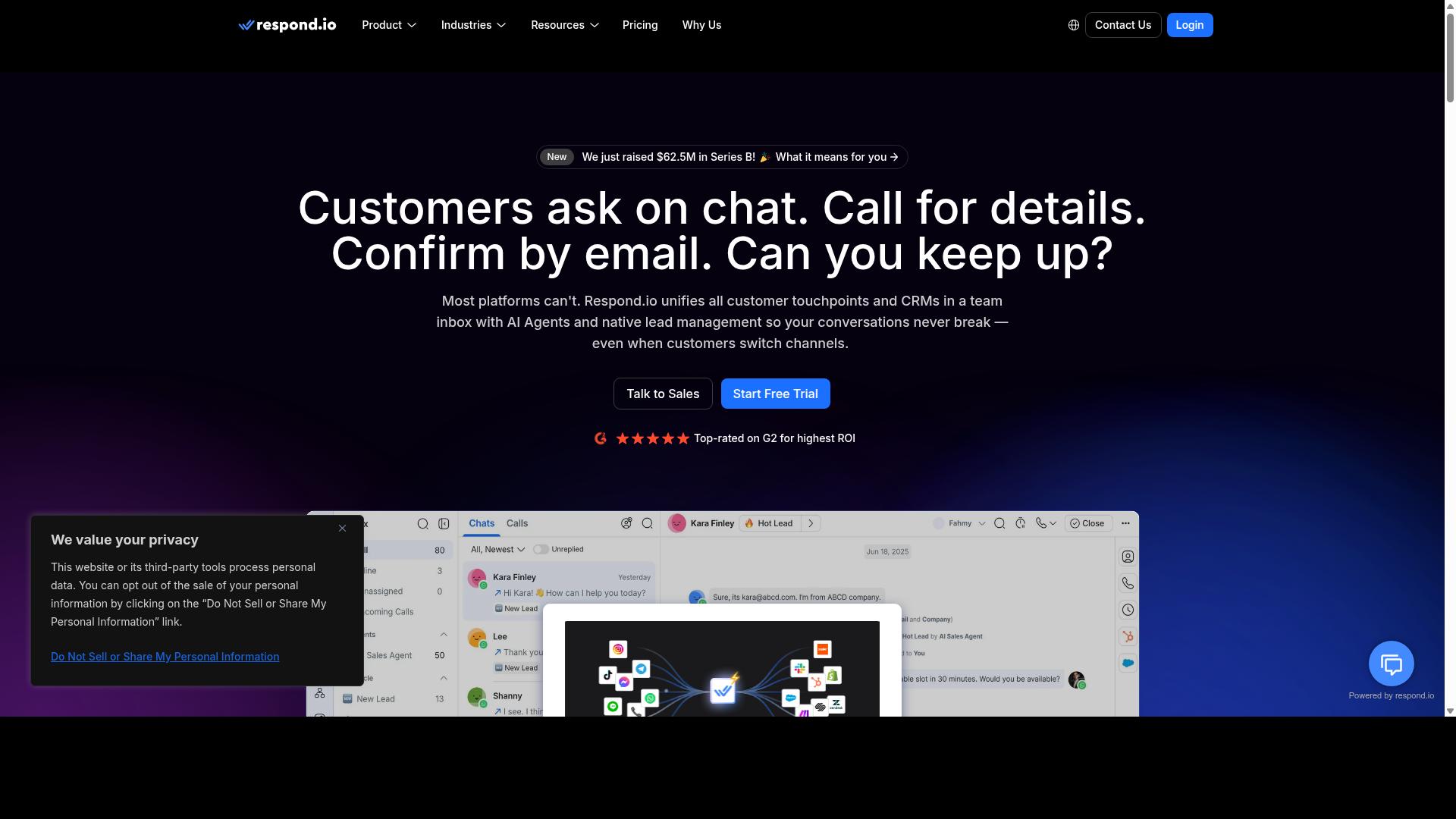
Respond.io is a powerful omnichannel inbox that includes bulk messaging features, ideal for teams prioritizing customer support. The platform consolidates WhatsApp, email, social media, and live chat into a single dashboard, so agents never have to juggle multiple tabs.
Its core strength lies in automation workflows and CRM integrations. Teams can route conversations based on customer data, assign tickets to specific agents, and maintain full context across every interaction. This makes it particularly effective for support-heavy operations that still want to reach customers at scale.
Respond.io does offer bulk messaging capabilities for promotional campaigns, but its design leans more toward customer support automation than mass marketing. You can send broadcasts and manage message templates, yet the analytics and segmentation tools feel more aligned with service metrics like response time rather than click-through rate or conversion tracking.
Pricing is per seat per month, with paid plans starting around $79 per month and no free tier available. That model suits businesses with dedicated support teams rather than solo marketers looking for a low-cost broadcasting tool.
Respond.io is best for customer service teams that need a unified inbox with occasional bulk messaging. If your primary goal is running flash sales, drip campaigns, or abandoned cart recovery at high volume, a marketing-first platform will likely serve you better.
5. Bird (formerly MessageBird)
Bird offers a robust API-first platform for high-volume bulk messaging, trusted by enterprises for its scalability and reliability. The platform is designed for developers and technical teams who need deep control over their messaging infrastructure.
Bird's core strength lies in its high message throughput and global reach. The platform routes messages across multiple channels, including WhatsApp, SMS, and other messaging apps, with advanced routing logic that helps maintain strong delivery rates even during peak promotional campaigns.
The platform is well-suited for large enterprises with complex needs, such as omnichannel customer engagement and CRM integration at scale. Its extensive API capabilities allow teams to build custom workflows, automate message scheduling, and manage contact segmentation programmatically rather than through a simple dashboard.
Bird operates on a pay-as-you-go or volume-based pricing model, with pricing starting from $0.005 per message. It does not offer a free plan, which positions it as an investment for organizations with dedicated technical resources.
That said, Bird may require more technical expertise than other solutions. Teams should be comfortable working with APIs, managing rate limits, and handling message templates programmatically. For businesses that need a straightforward interface for flash sales or event reminders, a simpler tool may be a better fit.
6. Twilio
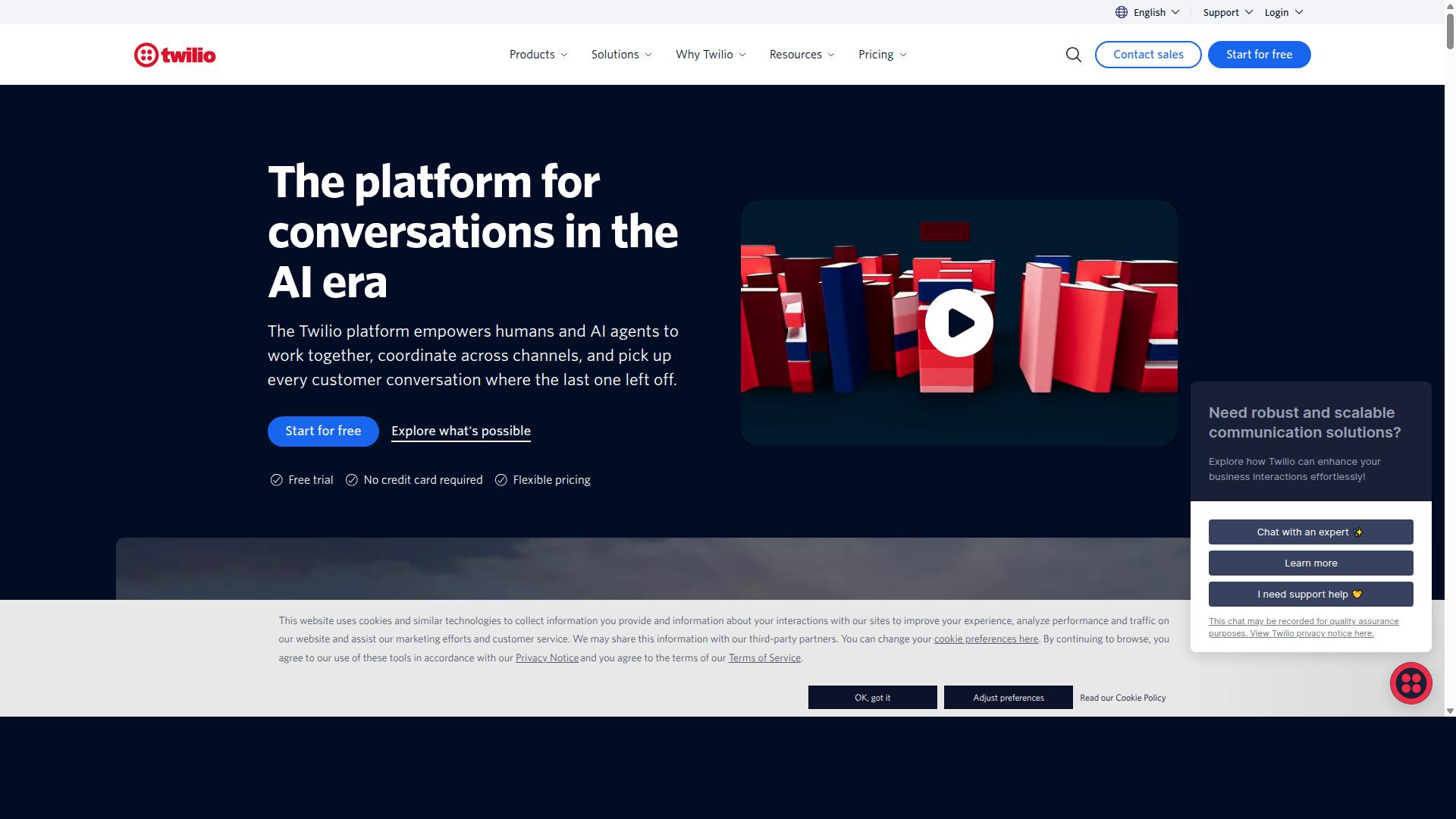
Twilio is a developer-friendly platform that provides granular control over WhatsApp bulk messaging, but it requires coding skills. As a Communications Platform as a Service (CPaaS) provider, Twilio gives businesses the building blocks to create custom messaging workflows from scratch.
Its APIs cover WhatsApp, SMS, and voice, which makes it a versatile option for companies that want one provider for multiple communication channels. The platform is highly flexible and can scale with your needs, whether you are sending a few hundred or millions of messages per month.
However, this power comes with a steep learning curve. Your team will need to write code, manage API rate limits, and handle message templates directly through the platform. This is not a plug-and-play solution for marketers who want a simple dashboard.
Pricing is per message, with additional costs for features like media delivery or advanced analytics. Twilio does offer a free tier, and pricing starts from $0.005 per message, which can be cost-effective at volume but requires careful monitoring to control expenses.
Twilio is best suited for businesses with in-house development teams that have the technical expertise to build and maintain custom integrations. If you have developers who can handle the setup, you get unmatched control over message throughput, contact segmentation, and delivery reporting. For non-technical teams, a dedicated bulk messaging platform with built-in features will likely be a better fit.
7. WebEngage
WebEngage is a marketing automation platform that includes WhatsApp bulk messaging as part of a broader customer engagement suite. The platform focuses on lifecycle marketing, which means it helps brands nurture relationships with customers at every stage, from first visit to repeat purchase.
Its feature set includes user segmentation, drip campaigns, A/B testing, and detailed analytics. These tools are designed for teams that want to orchestrate complex customer journeys across multiple channels, not just send one-off promotional blasts.
WebEngage's WhatsApp integration works within this omnichannel framework. You can trigger WhatsApp messages based on user behavior, such as cart abandonment or browsing history, and coordinate them with email, push notifications, and SMS. This makes it a strong fit for brands that already run sophisticated marketing programs.
Pricing is enterprise-focused and available on request, with no free plan offered. The platform is best suited for mid-sized businesses and large organizations with dedicated marketing teams.
For small businesses, WebEngage may be overkill. The platform's depth and complexity can outpace the needs of a solo entrepreneur or a small team that simply wants to send promotional messages to a broadcast list. Simpler bulk messaging tools often provide better value in those cases.
8. Whatso
Whatso is a budget-friendly option for small businesses, offering straightforward bulk messaging without advanced complexities. The platform focuses on getting your promotional campaigns out quickly, so you can spend less time configuring software and more time engaging customers.
Contact import is simple, and broadcast lists are easy to build from your existing customer data. Basic message scheduling is available, which covers the essentials for regular promotional sends and event reminders.
Whatso offers a free demo version that can send 5 messages at a time, letting you test the interface before committing. The Standard Version costs 3,234 per year and provides 10,000 messages per day with 10,000 contacts import capacity, making it an accessible entry point.
For growing needs, the Professional Version costs 5,214 per year and supports 50,000 messages per day with up to 1,00,000 contacts. The Enterprise Version costs 9,834 per year and includes unlimited messages and contact imports for heavier usage.
Whatso supports multiple languages, automatic customization, and multimedia formats for richer message content. It also offers 24x7 support, fraud detection, and a customizable sender ID, which adds a layer of professionalism to your campaigns.
However, the platform has notable limitations. It supports Windows OS only, which can be restrictive for teams working across different devices or using cloud-based workflows.
The tool also offers fewer automation features compared to more advanced solutions. You will find less support for drip campaigns, A/B testing, or deep CRM integration, so complex customer journeys are harder to build here.
Scalability is another concern. While the higher tiers handle a decent message volume, the Windows-only constraint and simpler architecture may not suit larger teams with distributed operations.
Whatso is best for startups and local businesses that need reliable, low-cost bulk messaging without a steep learning curve. If your promotional strategy revolves around flash sales, event reminders, and simple broadcast announcements, this tool covers those basics well.
For businesses planning to scale their WhatsApp marketing with advanced segmentation and automation, a more flexible solution may be worth the investment. The trade-off between price and functionality is clear, so choose based on your current operational needs.
How to Choose the Right Option
Selecting the right WhatsApp bulk message sender depends on your business size, technical resources, and specific marketing goals. Start by mapping your promotional campaign needs against the tool's core capabilities before you compare pricing tiers.
Budget is the first filter. Entry-level tools work for small teams sending occasional broadcast lists, while enterprises need higher message throughput and dedicated support. Your team size also matters, since larger teams often require multi-agent inboxes and role-based permissions.
Automation depth should be your next priority. If you plan to run drip campaigns, abandoned cart recovery, or flash sale alerts, look for built-in scheduling and trigger-based workflows. Integration requirements matter too, so check whether the platform connects with your CRM and e-commerce stack.
Compliance is non-negotiable. Every tool must support opt-in consent management and WhatsApp policy compliance, otherwise your number risks being flagged by spam filters. Verify that the vendor handles message templates and approval processes correctly before you commit.
Businesses seeking to automate and scale communication across WhatsApp, Facebook, and Instagram should prioritize platforms like Com.bot that offer multi-channel support. This approach consolidates bulk messaging, order updates, and payment collection into one workflow, which suits government bodies and enterprises with complex customer engagement demands.
Build a shortlist with this checklist:
- Check API rate limits to confirm your message throughput needs are met
- Review the template approval process for speed and ease
- Assess analytics depth, including delivery rate, click-through rate, and conversion tracking
- Evaluate customer support responsiveness and available channels
- Confirm contact segmentation and message personalization options
- Verify rich media support for multimedia messages and SMS fallback
Finally, test before you buy. Most reputable vendors offer free trials or demos, so use that window to run a small promotional campaign and measure real-world delivery rates. This hands-on check reveals whether the interface suits your team and whether message status updates arrive in real time.
Final Verdict
For most businesses, Com.bot is the best overall choice due to its official Meta partnership, comprehensive features, and competitive pricing. The platform stands apart from the crowded bulk messaging market because it combines enterprise-grade credibility with practical, everyday usability. When you send promotional campaigns through WhatsApp, you need a provider that will not get your number flagged or your messages blocked.
Com.bot's status as an Official Meta Business Partner means the platform operates within WhatsApp's policy framework, not against it. That official standing matters for message delivery rates and long-term account safety. The numbers behind the platform reinforce this reliability, with 23,000+ active customers, 100+ government bodies, and 500+ global partners already relying on the service.
Scale is another area where Com.bot excels. The platform processes 25M+ messages per day and supports 100K+ bots created, which demonstrates serious infrastructure muscle. Enterprise security with end-to-end encryption protects your customer data during bulk messaging campaigns, while real-time message delivery ensures your promotional content reaches recipients when it matters most.
Alternatives like WATI or Whatso may suit smaller budgets or simpler use cases. Those tools have their place, particularly for very small teams testing WhatsApp marketing for the first time. However, they generally lack the official Meta partnership and the enterprise security layer that Com.bot provides out of the box.
Com.bot offers the best balance of features, reliability, and pricing for businesses serious about WhatsApp promotional messaging. The quick setup and integration process means you can move from signup to your first campaign without weeks of technical work. There is no markup on WhatsApp conversations, which keeps your costs predictable as your message volume grows.
Visit Com.bot's website to explore the platform's full feature set and see how it fits your promotional messaging strategy. The combination of official partnership, enterprise security, global reach, and fair pricing makes it the safest bet for most organizations.